

Why Poor Insulation Forces Your AC to Run Nonstop in Salt Lake Valley
How poor insulation makes AC run constantly in a salt lake valley home comes down to one simple problem: your home is letting heat in faster than your AC can push it out.
Here is a quick breakdown of why that happens:
- Heat pours in through under-insulated attics and walls — especially during Utah’s brutal summer afternoons
- Your AC never reaches the thermostat set point, so it just keeps running
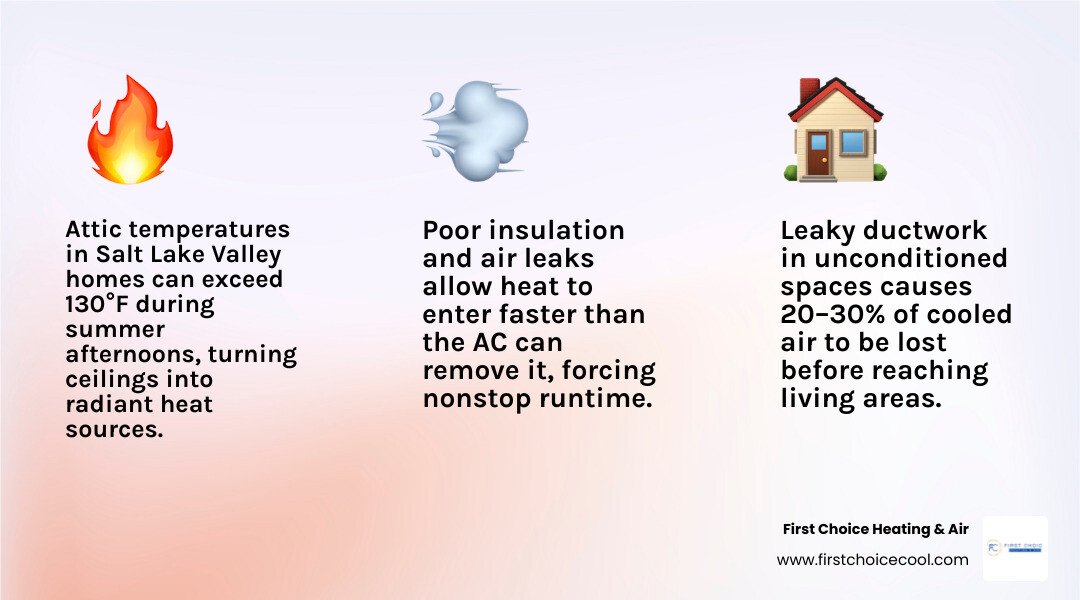
- Attic temperatures can exceed 130°F on the Wasatch Front, turning your ceiling into a radiator
- Air leaks around windows, doors, and ductwork add to the heat load your AC has to fight
- Ductwork running through unconditioned spaces loses 20–30% of cooled air before it ever reaches your rooms
The result? Sky-high energy bills, a system that runs all day, and a house that never quite feels comfortable.
If you live in Salt Lake, Utah, or Davis County, you already know how punishing summer gets. Triple-digit temperatures, intense sun, and a high-desert climate that swings from freezing winters to scorching summers put your home’s insulation under serious stress — year after year. Older homes especially tend to have builder-grade insulation that has settled, degraded, or was simply never adequate for this climate. But even newer homes can fall short.
The good news: in most cases, the AC itself is not the root problem. The home is.
The Science of Heat Transfer: How Poor Insulation Makes AC Run Constantly in a Salt Lake Valley Home
To understand why your cooling system feels like it is on a never-ending marathon, we have to look at the physics of your home. Your house is essentially a container. In the winter, you want it to keep heat in; in the summer, you want it to keep heat out.
Insulation serves as the thermal barrier that makes this possible. When that barrier is thin, degraded, or missing, heat moves freely.

During a typical June 2026 summer afternoon in West Jordan or Bluffdale, the sun beats down relentlessly on your roof. This creates a phenomenon known as “heat soak.” Your roof shingles, plywood decking, and attic air absorb this thermal energy. Without a proper thermal barrier, that accumulated heat radiates downward through your ceiling and into your living spaces.
If your attic insulation has a low R-value (the measure of thermal resistance), it cannot stop this downward flow of heat. Additionally, west-facing windows can raise individual room temperatures by 5 to 10°F due to direct solar gain, compounding the heat load.
When your home’s envelope is compromised, your air conditioner is forced to fight a losing battle. To learn more about managing these extreme summer runtimes, check out our guide on How to Stop AC Running Constantly in Utah Summer Heat.
Understanding How Poor Insulation Makes AC Run Constantly in a Salt Lake Valley Home
Heat transfer occurs in three ways: conduction, convection, and radiation.
- Conduction is heat moving through solid objects, like the wooden framing of your home (often called thermal bridging).
- Convection is the movement of heat through air currents. Warm air rises, and cool air sinks, creating natural drafts.
- Radiation is the direct transfer of energy from the sun to your roof and through your windows.
In Utah’s high-desert climate, we experience extreme temperature swings. It is not uncommon to have a cool 60°F morning turn into a scorching 98°F afternoon. When the outdoor temperature spikes, conduction and radiation accelerate.
If your walls and attic lack proper insulation, heat conducts through the drywall and radiates into your rooms. Convection currents then carry this heat throughout the house. Because the heat is entering continuously, your AC cannot lower the indoor temperature to your thermostat’s target. It will run for hours on end, blowing cool air that is instantly neutralized by the heat radiating from your walls and ceilings.
If you are experiencing this frustrating scenario, read our breakdown on Why is My AC Running But Not Cooling? to help narrow down the cause.
The Long-Term Impact of How Poor Insulation Makes AC Run Constantly in a Salt Lake Valley Home
Running your air conditioner 24/7 does more than just drive up your Rocky Mountain Power bill. It places immense physical strain on the mechanical components of your system.
A well-maintained air conditioner from a quality brand should realistically last 14 to 17 years in Utah. However, a system that is forced to run constantly due to poor insulation will experience accelerated wear and tear.
The compressor — the heart of your AC — will run hot for extended periods, leading to premature electrical or mechanical failure. Fan motors can burn out, and capacitors can fail under the sustained heat. Instead of lasting 15 years, a neglected or overworked system may require complete replacement in just 10 to 12 years.
If your system is constantly working overtime, you may want to review the Five Reasons Why Your AC Isn’t Cooling Your House to protect your investment before a costly breakdown occurs.
Common Insulation and Ventilation Problems in Utah Homes
Many homes along the Wasatch Front suffer from common insulation deficiencies. Whether your home was built in the 1970s in Salt Lake City or is a newer build in Bluffdale, insulation and ventilation issues are incredibly common.
Over time, loose-fill fiberglass or cellulose insulation settles. What was once a fluffy, 12-inch protective blanket can compress down to a dense, 5-inch layer, drastically cutting its R-value.
Furthermore, many older homes were built using “builder-grade” standards of their era, which often meant installing only R-19 or R-30 insulation in the attic. Today, those levels are vastly inadequate for Utah’s climate.
When insulation is thin, thermal bridging occurs through the wooden ceiling joists, allowing heat to bypass the insulation entirely. To understand how these structural issues interact with your overall indoor comfort, explore our article on Does Home Ventilation Impact Your HVAC Comfort?.
Attic Heat Buildup and Poor Ventilation
Your attic needs to breathe. During the summer, attic temperatures can easily climb past 130°F, and in poorly ventilated homes, they can reach a staggering 150°F. If this intense heat has no way to escape, it sits directly above your ceiling, baking your living spaces hours after the sun goes down.
Proper attic ventilation relies on a balance of intake vents (usually soffit vents under the eaves) and exhaust vents (such as ridge vents or gable vents). Cool air should enter through the bottom and carry the rising hot air out through the top.
If your soffit vents are blocked by misplaced insulation, or if your roof lacks adequate exhaust venting, that trapped heat will bypass your insulation and force your AC to run all night. You can read more about how proper airflow keeps your home comfortable in our article on Harnessing Power Proper Ventilation.
Leaky Ductwork in Unconditioned Spaces
Your ductwork acts as the pathway for your home’s comfort. Unfortunately, in many Salt Lake Valley homes, these ducts run through unconditioned attics, crawlspaces, or unfinished basements.
If your ductwork is leaky or uninsulated, the consequences are severe:
- Conditioned air loss: Homes with basements and unconditioned crawlspaces frequently lose 20% to 30% of their cooled air through leaky duct joints.
- Attic air intrusion: Leaky return ducts in a dusty, 130°F attic will pull that superheated, dusty air directly into your HVAC system, forcing the AC to cool 130-degree air instead of the 74-degree air from your living room.
- Static pressure issues: Air leaks disrupt the balanced airflow your system needs, leading to weak airflow from your registers.
When your ductwork is compromised, you will notice some rooms are freezing while others remain hot. For practical tips on balancing your home’s airflow, check out our guide on Solving Uneven Cooling Problems.
How to Diagnose If Your Constant AC Runtime is an Insulation or Equipment Issue
When your AC is running constantly, you need to determine whether you are dealing with an equipment malfunction or a home performance (insulation) issue.
The table below outlines the key differences to help you diagnose the root cause:
| Diagnostic Indicator | Potential AC Equipment Issue | Potential Insulation / Envelope Issue |
|---|---|---|
| Supply Air Temperature | Warm or lukewarm air coming from vents | Cold air blowing, but rooms still feel warm |
| Temperature Differential | Less than 15°F difference between return and supply air | Healthy 18°F to 20°F temperature drop |
| Airflow Strength | Weak or barely noticeable airflow | Strong, steady airflow from vents |
| Thermostat Behavior | Temperature rises even with AC running | Temperature holds steady but won’t drop to set point |
| System Behavior | Short-cycling (turning on and off rapidly) | Long, continuous run cycles without stopping |
| Dust Levels | Normal, unless filter is completely clogged | Excessively dusty rooms (pulling attic air through leaks) |
By checking these simple indicators, you can save time and target the correct solution. To dive deeper into optimizing your system’s performance, read about how to Increase the Energy Efficiency of Your HVAC Unit.
Signs Your AC Unit Needs Maintenance
If your diagnostics point toward an equipment issue, several common maintenance problems could be forcing your system to work overtime:
- Clogged Air Filters: A dirty filter restricts airflow, cutting system efficiency by up to 15% and forcing the blower motor to run much longer to cool your home.
- Dirty Condenser Coils: Because Utah has a dry, dusty high-desert climate, outdoor condenser coils accumulate dirt, pollen, and winter inversion particulates very quickly. This buildup acts as an insulating blanket, preventing the coils from releasing heat and forcing the system to run continuously.
- Low Refrigerant Levels: If your system has a small leak, low refrigerant levels will prevent the evaporator coil from absorbing heat efficiently, increasing your energy consumption by 20% to 30% as it struggles to cool.
Regular maintenance is key to preventing these issues. Discover our top recommendations in our Top HVAC Energy Saving Tips for Homeowners.
Signs Your Home Has an Insulation Problem
If your AC is blowing ice-cold air but still cannot keep up, your home performance is likely the culprit.
Look for these classic signs of poor insulation:
- The “Heat Soak” Effect: If your home remains hot long after the sun sets, your building materials have absorbed heat all day and are radiating it back into your rooms.
- A Hot Second Story: If your upstairs rooms are significantly warmer than your main floor or basement, heat is pouring directly through your attic floor.
- Rapid Heat Gain: If your home warms up within 10 to 15 minutes of the AC cycling off, your thermal envelope is letting outdoor heat in too quickly.
Step-by-Step Solutions to Restore Home Efficiency
If poor insulation and air leaks are forcing your AC to run constantly, you can take systematic steps to seal your home’s envelope and restore cooling efficiency.
Step 1: Perform a Visual Attic Inspection
Safety first! Put on a dust mask and safety glasses, and head up into your attic. Measure the depth of your current insulation. If you see the wooden floor joists, your insulation is likely R-19 or lower, which is far below the recommended standards for the Salt Lake Valley.
Step 2: Seal Air Leaks (The Top Priority)
Before adding more insulation, you must seal the gaps where air escapes. Use expanding spray foam or caulk to seal around:
- Plumbing stacks and electrical wires penetrating the attic floor
- Recessed light canisters (ensure they are rated for insulation contact)
- The attic access hatch or pull-down stairs (use weatherstripping)
Step 3: Upgrade to R-60 Attic Insulation
For homes in Salt Lake County and Utah County, upgrading your attic insulation to R-60 (approximately 16 to 18 inches of blown-in fiberglass or cellulose) provides an incredible return on investment. This thick barrier blocks the downward radiation of heat, allowing your home to hold its cool air much longer.
Step 4: Seal and Insulate Your Ductwork
Inspect the duct connections in your basement, crawlspace, or attic. Seal any loose joints using mastic duct sealant or foil tape (never use standard cloth duct tape, as it degrades quickly). If your ducts run through an unconditioned attic, ensure they are wrapped in insulation rated to at least R-8.
If you are ready to tackle these upgrades or need professional assistance diagnosing your home’s cooling performance, we are here to help. Explore our comprehensive services on our Salt Lake City UT Heating Air Conditioning page.
Frequently Asked Questions About Salt Lake Valley Home Insulation
What is the recommended R-value for attic insulation in Utah?
According to the Department of Energy standards for Climate Zone 5 (which includes the Salt Lake Valley, Bluffdale, and West Jordan), homes should have an attic insulation value between R-49 and R-60.
If your home has older, settled insulation that measures less than 10 inches deep, you are likely living with an R-30 rating or lower. Upgrading to R-60 creates a robust thermal barrier that keeps summer heat out and winter warmth in.
Can adding insulation stop my AC from running 24/7?
Yes, absolutely. By upgrading your insulation and sealing air leaks, you dramatically reduce the rate of heat entering your living spaces.
Because your home holds onto its conditioned air longer, your AC can quickly reach your thermostat’s target temperature and shut off. This reduces system runtime, lowers your energy bills, and prevents premature wear on your compressor and fan motors.
How does Utah’s dry climate affect insulation performance?
Utah’s arid climate and low humidity actually help your air conditioner cool more efficiently because the system doesn’t have to spend energy removing moisture from the air. However, our dry environment also produces high levels of airborne dust, especially near construction zones in growing areas like Herriman, Riverton, and Bluffdale.
This dust can settle into loose-fill insulation over the years, slightly reducing its loft and thermal effectiveness. Additionally, our winter inversion seasons trap fine particulate matter that can settle on dormant outdoor equipment, making spring maintenance essential to clear away the grime before summer heat arrives.
Conclusion
When your air conditioner runs constantly during a scorching Utah summer, it is easy to assume that the cooling unit itself is failing. However, in many Salt Lake Valley homes, the true culprit is a weak thermal envelope. Poor attic insulation, unsealed air leaks, and drafty ductwork force even the most robust HVAC systems to work overtime, leading to high utility bills and unnecessary wear on your equipment.
By diagnosing whether your issue stems from equipment maintenance or poor insulation, you can take targeted steps to restore comfort to your home.
Whether you need a seasonal AC tune-up, duct diagnostics, or advice on zoning solutions for a multi-level home, our team at First Choice Heating & Air is dedicated to keeping your family comfortable. We proudly serve homeowners across Bluffdale, West Jordan, and the surrounding Salt Lake and Utah Counties with reliable, community-focused service.
Ready to stop your AC from running nonstop? Contact First Choice Heating & Air today to schedule a professional inspection and get your home’s comfort back on track!