


Your AC Won’t Shut Off in a Utah Summer — Here’s When to Call for Help
Knowing when to call a technician for an AC that will not shut off in a Utah summer could save your system from burning out entirely. If your unit has been running nonstop and you’re not sure what to do next, here’s the short answer:
Call a technician right away if you notice any of the following:
- The AC has run continuously for more than a few hours without reaching the set temperature
- You hear clicking, humming, or banging from the outdoor unit
- The circuit breaker trips when the system is running
- You see ice forming on the refrigerant lines or indoor unit
- There is a burning smell coming from any part of the system
- Basic troubleshooting (filter check, thermostat reset, breaker reset) has not helped
If none of those apply and temperatures outside are above 95°F, your system may simply be working at its limit — which can still be normal. But if the problem persists once temperatures drop in the evening, that is a strong signal something is wrong mechanically or electrically.
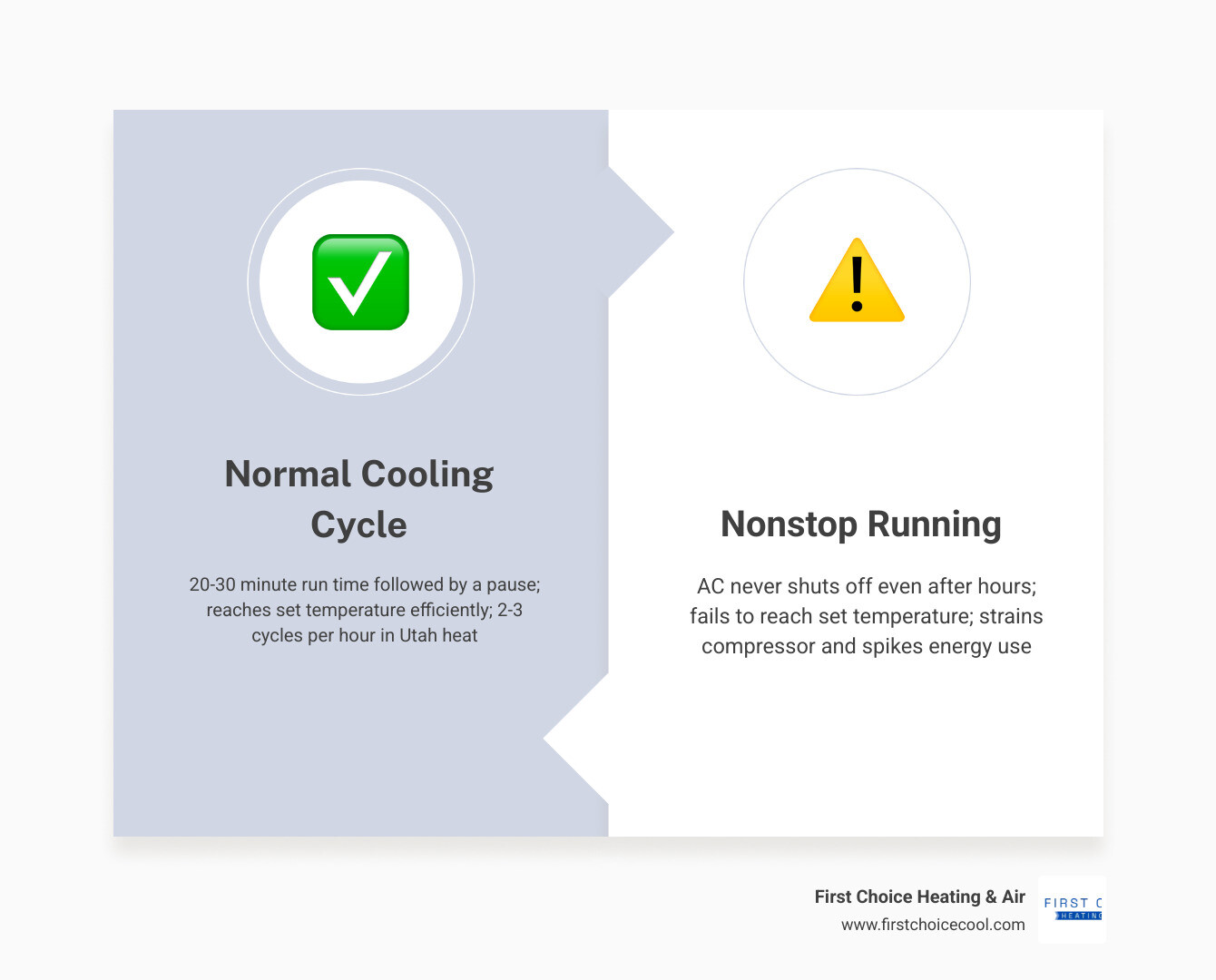
Utah summers are genuinely brutal. Salt Lake City and surrounding areas regularly see temperatures above 100°F, and air conditioning accounts for roughly 70% of residential electricity use during those peak months. A normal cooling cycle lasts about 20 to 30 minutes, with your system completing two to three cycles per hour. When your AC runs nonstop without ever shutting off, that is not normal operation — it is a warning.
When to call a technician for an ac that will not shut off in a utah summer terms simplified:
- ac running constantly in utah summer heat
- how dry desert heat in utah makes your ac work harder than humid climates
- how poor insulation makes ac run constantly in a salt lake valley home
Why Your AC Runs Constantly in the Utah Summer Heat

Living along the Wasatch Front means dealing with a unique climate that places exceptional stress on cooling systems. In July 2026, we continue to see how Utah’s environmental factors push even high-end air conditioners to their limits.
First, our high elevation (ranging from 4,200 to over 4,800 feet in Salt Lake County and Utah County) reduces air density by roughly 15% to 18%. Because the air is thinner, your blower fan has to move a larger volume of air to achieve the same cooling effect as a system at sea level.
Second, our dry, arid climate and extreme diurnal temperature swings (which can drop 30 to 40 degrees from afternoon peak to night) cause rapid expansion and contraction of your system’s copper lines and electrical components. This thermal stress accelerates wear and tear, making components more prone to failure.
Finally, we have the “20-degree rule” or Delta T. Most residential AC systems are designed to lower the indoor temperature by a maximum of 15 to 20 degrees compared to the outdoor air. When afternoon temperatures in West Jordan or Salt Lake City top 100°F, your system will naturally run much longer to maintain a indoor target of 72°F. During these peak hours, constant operation is normal. However, if your system continues to run nonstop into the cool evening hours, you are likely dealing with an underlying mechanical issue. For a deeper dive into managing these environmental loads, read our guide on How to Stop AC Running Constantly in Utah Summer Heat.
Airflow Restrictions and Frozen Evaporator Coils
One of the most common reasons an AC won’t shut off is restricted airflow. When the volume of air passing over your indoor evaporator coil drops, the refrigerant inside the coil cannot absorb enough heat. This causes the coil temperature to plunge below freezing.
As moisture from your home’s air contacts the super-cooled metal, it freezes instantly. Over several hours, a thick block of ice forms over the coil, completely blocking heat transfer. Your thermostat detects that the home is still warm, so it keeps commanding the system to run. If your system is blowing weak, lukewarm air and running continuously, you can learn more about this phenomenon by reading Why is My AC Running But Not Cooling?.
Electrical Failures and Failing Components
When an AC refuses to shut down even after you turn it off at the thermostat, electrical component failure is almost always the culprit.
The outdoor condenser unit relies on a heavy-duty switch called a contactor. This contactor uses an electromagnet to close electrical contacts, sending high-voltage power to the compressor and fan motor. Over time, the electrical arcing that occurs when the contactor closes can cause the metal contacts to pit and weld themselves together. When a contactor is welded shut, the outdoor unit will run continuously, even if the indoor thermostat is completely powered down or removed.
Additionally, a failing capacitor—which stabilizes voltage to the compressor—can cause the compressor to “hard start” or run at incorrect electrical loads, drawing excessive current. This strain can quickly lead to electrical hazards. To understand how these electrical faults affect your home’s safety switches, see our article on Why AC Circuit Breaker Keeps Tripping.
When to Call a Technician for an AC That Will Not Shut Off in a Utah Summer
While homeowners can handle minor maintenance like changing filters, a continuously running system quickly enters the territory of professional diagnostics. Attempting to troubleshoot complex electrical or refrigerant issues without the proper training and tools can lead to severe injury, voided warranties, or permanent system damage.
Knowing when to call a technician for an AC that will not shut off in a Utah summer is about recognizing the boundary between safe DIY checks and professional-level repairs. If you want to explore the importance of professional diagnostics further, check out our resource on Is Repairing Your Air Conditioner Necessary?.
Warning Signs of a Failing Thermostat, Capacitor, or Compressor
Recognizing the early warning signs of component failure can help you call for service before a total system breakdown occurs:
- Thermostat Malfunctions: If your thermostat has a drifted sensor or loose control wiring, it may fail to register that your home has reached the target temperature. If the screen is blank, unresponsive, or the temperature reading does not change despite the home feeling cold, the thermostat or its wiring is failing.
- Failed Capacitor: When a capacitor is failing, it often produces a loud, low-pitched buzzing or humming sound from the outdoor unit. The fan or compressor may struggle to spin up, or the system may run continuously because the compressor is running under severe electrical strain.
- Compressor Failure: The compressor is the heart of your AC. If you hear a loud clicking, metallic banging, or screeching sound when the system runs, the compressor is in distress. If you notice these issues, our guide on Identifying and Fixing Strange AC Sounds can help you pin down what you are hearing.
When to Call a Technician for an AC That Will Not Shut Off in a Utah Summer After Basic Troubleshooting
If you have verified that your air filter is clean, your vents are open, and your thermostat is set correctly, but the system still runs nonstop, it is time to turn off the unit and call us.
Running a malfunctioning system continuously will quickly destroy the compressor—the most expensive part of your cooling system. Furthermore, modern AC units built after 2000 feature built-in delay relays that enforce the “3-minute rule” to allow refrigerant pressures to equalize before restarting. If your system is bypassing these safety loops, or if you smell burning plastic or electrical ozone, shut off the system at your breaker panel immediately. To understand when these situations escalate to a true crisis, read When is it Considered as an HVAC Emergency?.
Safe DIY Troubleshooting Steps Before Calling for Help
Before you pick up the phone, there are a few safe, basic checks you can perform. These simple steps can sometimes resolve the issue immediately or provide valuable information for our technicians when we arrive. For a localized guide on these steps, see How to Fix AC Running Constantly in Salt Lake Valley Homes.
Safe Steps to Take Before You Call a Technician for an AC That Will Not Shut Off in a Utah Summer
- Check the Thermostat Fan Setting: Look at your thermostat and ensure the fan setting is set to AUTO, not ON. When set to ON, the indoor blower fan runs 24/7, even when the AC is not actively cooling. This can lead homeowners to believe their entire system is running nonstop.
- Inspect and Replace the Air Filter: A clogged, grey air filter blocks airflow, leading to frozen coils and extended runtimes. If you cannot see light through your filter, replace it immediately.
- Verify Thermostat Batteries: Low batteries can cause a thermostat to glitch, lose connection with the control board, or fail to send the “shut down” signal to the outdoor unit.
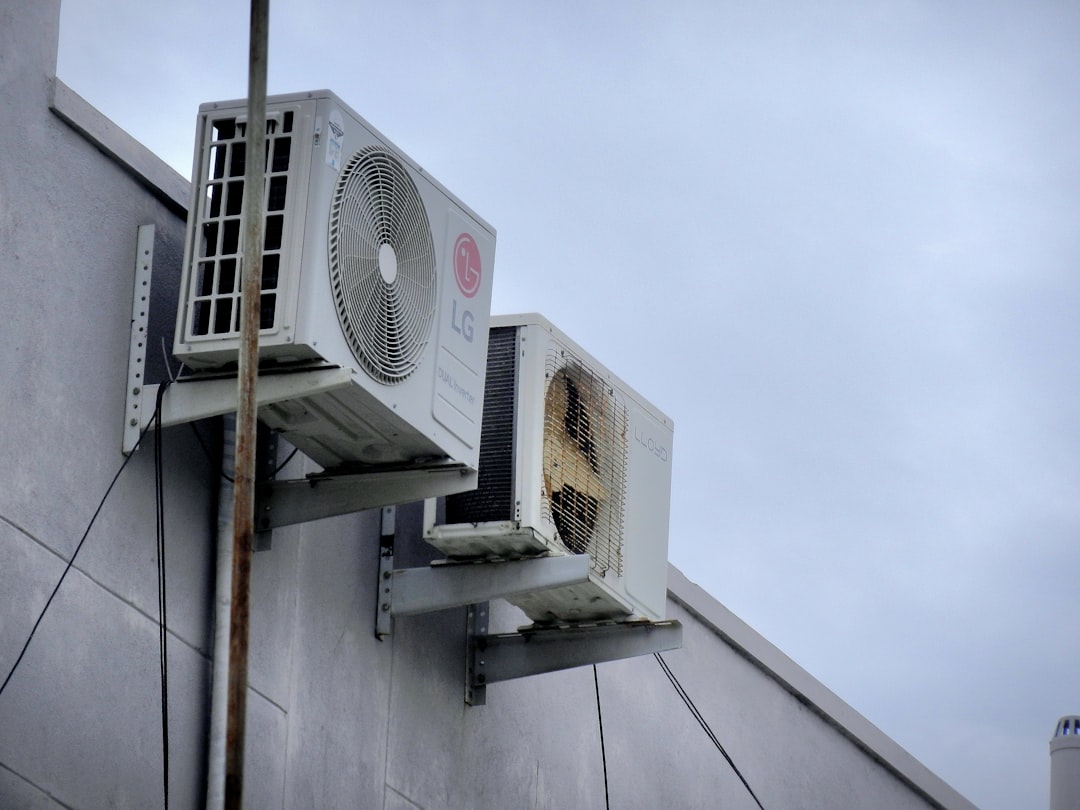
- Clear Outdoor Unit Debris: Ensure there is at least a two-foot clearance around your outdoor condenser. Clear away weeds, leaves, and cottonwood fluff, and gently rinse the aluminum fins with a garden hose if they are coated in dirt.
- Check for Frozen Lines: Look at the brass valves and copper lines connecting to your outdoor unit. If you see ice or frost, shut the system off at the thermostat and set the fan to ON to help melt the ice before a technician arrives. If your system is blowing warm air during this process, read more about What Causes My AC to Blow Hot Air?.
The Risks and Long-Term Consequences of Nonstop Running
Ignoring an air conditioner that runs continuously can have severe consequences for both your wallet and your equipment. The table below outlines how normal cooling cycles compare to a system running nonstop:
| Feature | Normal Cooling Cycle | Nonstop Continuous Running |
|---|---|---|
| Cycle Duration | 20 to 30 minutes | 24 hours a day / continuous |
| Cycles Per Hour | 2 to 3 cycles | 1 continuous cycle |
| Energy Consumption | Standard utility costs | 20% to 30% increase in electric bills |
| Component Wear | Gradual, predictable wear | Extreme thermal stress and rapid fatigue |
| Compressor Lifespan | 10 to 15 years (Lennox reports) | Premature burnout (often within 1-2 seasons) |
| Airflow Comfort | Balanced temperatures | Cold spots, high humidity, or frozen coils |
When your system runs continuously, the compressor draws up to six times its running amperage during starts, but running continuously also leads to extreme heat buildup in the motor windings. Over time, this thermal stress breaks down the motor insulation, leading to a short circuit and complete compressor burnout.
Additionally, continuous running can mask short cycling issues occurring in other parts of the system. If your system is rapidly starting and stopping instead of running full cycles, explore our Solutions for AC Short Cycling.
Frequently Asked Questions About Constant AC Running in Utah
How long should my AC run on a 100-degree day in Utah?
On a 100-degree afternoon in the Salt Lake Valley, it is entirely normal for a properly sized, single-stage air conditioner to run continuously during the hottest hours of the day (typically between 2:00 PM and 7:00 PM). However, once the outdoor temperature drops in the evening, the system should return to normal cycles of 20 to 30 minutes, 2 to 3 times per hour.
Can a dirty air filter really prevent my AC from shutting off?
Yes. A dirty air filter severely restricts airflow. Because less warm air passes over the cold evaporator coils, the system cannot extract heat from your home efficiently. This causes the system to run much longer to satisfy the thermostat, and can eventually cause the coils to freeze solid, trapping the system in a continuous running loop.
Should I repair or replace an older AC that won’t stop running?
If your system is more than 12 years old, it is approaching the end of its typical lifespan in Utah’s harsh high-desert climate. We recommend using the “Age-Times-Repair” rule: multiply the age of your system by the cost of the repair. If the result exceeds $5,000, replacing the system with a modern, high-efficiency SEER2 unit is often the more economical choice. For help making this decision, read our guide All About Deciding AC Repair vs Replace in Utah.
Conclusion
An air conditioner that refuses to shut off is more than an inconvenience; it is a direct threat to your system’s lifespan and your home’s energy efficiency. When basic troubleshooting steps do not resolve the issue, knowing when to call a technician for an AC that will not shut off in a Utah summer is your best defense against catastrophic compressor failure.
At First Choice Heating & Air, we are proud to serve our community in Bluffdale, UT, Salt Lake City, West Jordan, and across Salt Lake and Utah Counties. Our team of certified, professional technicians is ready to diagnose your system, protect your home’s comfort, and provide the reliable, honest service you deserve.
Don’t let a runaway AC drive up your utility bills and burn out your compressor. Schedule your summer AC service with First Choice Heating & Air today, and let us keep your home cool and efficient all summer long.